


Kenya, also known as the Republic of Kenya, is a country in East Africa located along the equator. It is bordered by five countries, Tanzania to the south, Somalia to the east, Uganda to the west, Ethiopia to the north, South Sudan to the northwest and the Indian Ocean to the southwest.
Kenya covers an area of 580,367 square kilometers and has a population of about 55 million people (2023 estimate). Its capital city is Nairobi, which serves as a hub for commerce, culture and tourism. The country also has major cities and these include Mombasa (a key port city), Kisumu, Nakuru, and Eldoret.
People and culture

Kenya has diverse ethnic communities each with unique language and traditions.The major ethnic groups include the Kikuyu, Luo, Luhya, Kalenjin, Turkana, Kamba and Maasai, among others.
Kenyans practise traditional values like maintenance of kinship ties and humility. Beliefs in superstition are not common except those people deep in the village. Activities like child naming, marriage, death and other rites of passage are still heavily influenced by the traditional beliefs and practices ranging from community to community.
Some communities have retained their traditional lifestyle like living in huts, decorating their hair with soil, wearing robes, and walking barefooted. For instance, the Masaai have maintained their nomadic life which revolves around animals and search for pasture. The Masaai is one of the tribes that has fiercely resisted the modernisation and consequently it has gained respect through that action. Kenyans practice different Traditions play a big role
Language
Kenya is a linguistically diverse country with over 68 languages from the Bantu, Nilotic, and Cushitic language families. The official languages are two for instance; Swahili which is the national language widely spoken and unifying across the country. English is used in government, education, and business.
The indigenous languages such as Kikuyu, Luo, Kalenjin, and Somali, play a vital role in local identity and cultural heritage especially in rural areas. Urban centers have developed informal languages like Sheng which is a blend of Swahili, English, and indigenous tongues, reflecting modern youth culture.
Flora and Fauna in Kenya

Kenya’s flora is diverse which reflects its varied landscapes and climates, from savannas and forests to arid deserts and coastal regions. Grassland areas dominate the savannas featuring trees like acacias and baobabs. While highland forests on Mount Kenya and the Aberdare Ranges host unique species such as African olive and cedar.
Indigenous forests like the Kakamega and Mau forests are home to hardwoods and bamboo. Coastal areas are basically savanna with patches of residual forests featuring trees like; mangroves, palms, and casuarinas, while arid zones support succulents, doum palms, and commiphora trees. Wetlands around Lake Victoria are filled with papyrus reeds, lotus, and water lilies. Kenya also has an abundance of medicinal plants, such as aloe vera and neem which are used in traditional remedies.
Kenya is known for its rich and diverse wildlife which thrives across its varied ecosystem. The country is home to the Big Five (lion, elephant, leopard, buffalo, and rhinoceros) and other species such as cheetahs, giraffes, zebras, and wildebeests, which are famous for their annual migration in the Maasai Mara.
Kenya boasts over 1,100 bird species, including flamingos, ostriches, and crowned cranes. Its rivers and lakes host crocodiles and hippos, while the coastal waters support dolphins, sea turtles and coral reefs.
Unique species like the critically endangered hirola (Hunter’s hartebeest) along the border of Somalia also call Kenya home. All these species can be spotted in Kenya’s national parks which include; Maasai Mara, Mount Kenya, Amboseli, Aberdare, Lake Nakuru, Mount Kenya and Tsavo, among others.
Tourist destination in Kenya
Shimba hills national reserve

Shimba Hills National Reserve located 33 kilometers from Mombasa in Kenya’s coastal region. The reserve is the smallest protected area covering 192 square kilometers. The Shimba Hills flora is a mix of coastal rainforest, open grasslands, and rolling landscapes.
The reserve is home to rare plant species like the ancient cycad. Shimba Hills hosts a variety of wild animal species such as elephants, sable antelopes, leopards, and colobus monkeys. The reserve is also a birders paradise hosting more than 230 bird species.
One of the main attractions in the Shimba Hills is Sheldrick Falls, a 25-meter waterfall that can be reached through a guided forest hike. Visitors to the hills are also treated to views of the Indian Ocean. The park is best visited during the dry season during the months of June to October being the best time to visit.
Nairobi national park

Nairobi National Park is located just 7 kilometers from Nairobi’s city center and the first national park to be established in Kenya in 1946. The park covers an area of 117 square kilometers. Nairobi National Park is a home to lions, rhinos, giraffes, zebras, and over 400 types of birds. The vegetation of the area features open grasslands, acacia trees, and rivers, offering plenty of natural beauty.
Visitors can enjoy safari drives to spot animals, visit the Ivory Burning Site Monument, a symbol of Kenya’s fight against poaching, or walk along the nature trails. The park has an Animal Orphanage which was established in 1963 which works as a treatment and rehabilitation center for wild animals and birds. The park is easy to get to and is great for day trips, especially during the dry seasons (June to October and January to February) when animals gather around water sources.
Hell’s Gate national park

Hell’s Gate National Park is located in Kenya’s Rift Valley between Lake Naivasha and the Longonot and Suswa volcanoes 14 kilometers off Nairobi- Naivasha highway. The park is named after the Ol Njorowa Gorge, a narrow break which runs through the middle of the park. This gorge was formed by the overflow of Lake Naivasha.
The park is covered by ashes from the Longonot eruption which occurred 100 years back. Hell’s Gate National Park was established in 1984 and covers an area of 68.25 square kilometers.
The park is famous for its scrub clad volcanoes, Lower Gorge, towering cliffs, hot springs, water-gouged gorges, geothermal station, and plumes of geothermal steam.
The park is home to big cats and other animals like zebras, klipspringers, giraffes, buffaloes, rock hyrax and antelopes. The rare Chandler’s mountain reedbuck also calls Hell’s Gate national park home.
The park also hosts more than 103 bird species and they can be spotted around the cliffs which work as their nestling place.
Some of the rare bird species that can be spotted in Hell’s Gate National Park include;hooded vultures, Verreaux’s eagle, Lammergeyer, and Ruppel’s griffon. One of the Hell’s Gate National Park unique features is that it can be explored on foot or on bicycle which is rare to other national parks in Kenya. The park also features other tourist attractions like central Tower and Fischer’s Tower which offer outdoor adventures like climbing and photography.
Samburu national park

Samburu National park is located in northern Kenya 350 kilometers from Nairobi city on the banks of Ewaso Ng’iro River. The park covers an area of 165 square kilometers. The protected area is a home to the Samburu Special Five that are not seen in other national parks these include; Grevy’s zebra, Somali ostrich, reticulated giraffe, gerenuk, and Beisa oryx. There are also other animals like elephants, lions, cheetahs, and leopards.
The park hosts over 450 bird species including vultures and kingfishers. Within the park there is Ewaso Ng’iro River which flows through riverine forest, grassland, thorn trees and acacia. Samburu National park offers cultural visits where you meet the Samburu people who share their beadwork, dances and their way of life with visitors.
Mount Kenya national park

Mount Kenya National Park is a UNESCO World Heritage Site located in central Kenya. The park is 175 kilometers from Nairobi and covers an area of 715 sq kms. Mount Kenya National park is a home to Mount Kenya Africa’s second highest mountain standing 5199 meters above the sea level at its highest peak, Batian.
The mountain has other several peaks like; Nelion and Lenana. The park was established in 1949 with the aim of protecting Mount Kenya, wildlife and its unique plants. Later in 1997 the park was designated as a UNESCO World Heritage Site. Mount Kenya National Park is also a Biosphere Reserve.
The park has a variety of vegetation types and they change as you go higher. For instance, the lower area is covered with forests featuring bamboo and hardwood trees. The middle zones have moorlands and heathlands. While at higher altitudes there are alpine plants like groundsels and giant lobelias.
Mount Kenya National Park hosts a number of wild animals and some of these include; elephants, buffaloes, leopards, monkeys, and antelopes, along with over 160 bird species. The park also offers cultural tours in the communities around the park. For instance the Kikuyu people who believe that the mountain is the home to their god, Ngai. Mount Kenya National Park can be accessed from different entry points and some of these include; Naro Moru, Sirimon, and Chogoria.
Lake Nakuru national park

Lake Nakuru National Park located 160 kilometers northwest of Nairobi city. The park covers an area of 188 sq kilometers including Lake Nakuru, a sodarich lake. Lake Nakuru National Park was first established as a conservation area in 1957, later in 1961 it was declared a bird sanctuary so as to ensure bird protection in the area. In 1968 Lake Nakuru National Park was gazetted as one of Kenya’s national parks and several animals were introduced in the park. In 2009 the protected area was declared as a UNESCO world heritage site.
Lake Nakuru National Park has over 450 bird species. The alkaline lake Nakuru attracts thousands of flamingos which creates pink shoreline, cormorants and pelicans. The park also hosts a number of wildlife species like Rothschild’s giraffes, black and white rhinos, lions, leopards, and buffalos. Lake Nakuru National park has other tourist attractions like
Lake Nakuru which is known for waterbirds and fl;amingos, the Makalia Falls, Baboon cliff which offers great views of the lake, Lion Hill which offers views of the whole park and the Rhino sanctuary. The park has diverse vegetation types and these include; grasslands, acacia forests, rocky cliffs, and marshes.
Tsavo East national park

Tsavo East National Park is the oldest national park in Kenya established in 1948 with its counterpart Tsavo West National Park. The park is located in southeastern Kenya in a semi-arid area of Taru Desert. The protected area is located in Taita-Taveta, the former Coastal Province a few kilometers from Voi town and 250 km away from Nairobi City.
The park also borders Chyulu Hills National Park and Mkomazi Game Reserve in Tanzania. It was named after the Tsavo River which crosses the park from East to West. Tsavo East National Park is the largest protected area in Kenya covering an area of 13,747 square kilometers.
The park is famous for hosting large numbers of mammals including the African big fives(buffaloes, rhinos, elephants, leopards and lions), other mammals in the parks include; crocodiles, hippos, wildebeests, lesser kudu, Gerenuk, waterbucks and giraffes. The park also features 500 bird species such as ostriches, weaver birds and kingfishers.
Tsavo East has several major tourist attractions, for instance; the Mudanda Rock, a large rock formation which is a water enchantment area and supplies water to all dams and attracts wildlife making a good spot for game viewing. The Yatta plateau is the major tourist attraction in Tsavo East National Park. This is the world’s longest lava flow and runs along the park’s boundaries in the western side.
The plateau was formed by hot lava from Ol Donyo Sabuk Mountain. Within Tsavo East National Park there is Aruba Dam, a man made dam which was constructed across Voi River. Many animals gather around this dam offering an opportunity to see animals up close. The Galana River and Lugard falls are other tourist attractions in the park.
Tsavo West national park

Tsavo West National Park, also known as land of lava, springs, man eaters and magical sunsets is located in the southeastern part of Nairobi along Nairobi Mombasa highway. The park is part of Tsavo conservation area which includes Tsavo East National Park and covers an area of 9,065 square kilometers.
The park is famous for its scenic beauty characterised by a wide range of vegetation types. The park is covered by riverine vegetation and savannah grassland featuring acacia woodlands, rocky ridges and scrublands. Tsavo West National Park hosts a number of wildlife like; lions, leopards, elephants, buffaloes, black and white rhinos, giraffes, zebras, cheetahs and a variety of antelopes.
Tsavo West also has over 600 bird species, including hornbills,Basra reed warbler, kingfishers, secretary birds and starlings.
The major tourist attractions in the park include Mzima Springs, a site of fifty million gallons of crystal-clear pools fed by underground parched lava rocks. The springs host hippos and crocodiles and can be seen through an underwater viewing chamber.
The park is home to Chaimu Crater, a volcanic hill with black lava rock and the Shetani Lava Flow is a large field of black lava rocks formed by volcanic activity. Another tourist attraction in Tsavo West is the Ngulia Rhino Sanctuary, a protected area where visitors can see endangered black rhinos. Another highlight is Poacher’s Lookout which offers stunning views of the park and Mount Kilimanjaro.
Amboseli national park
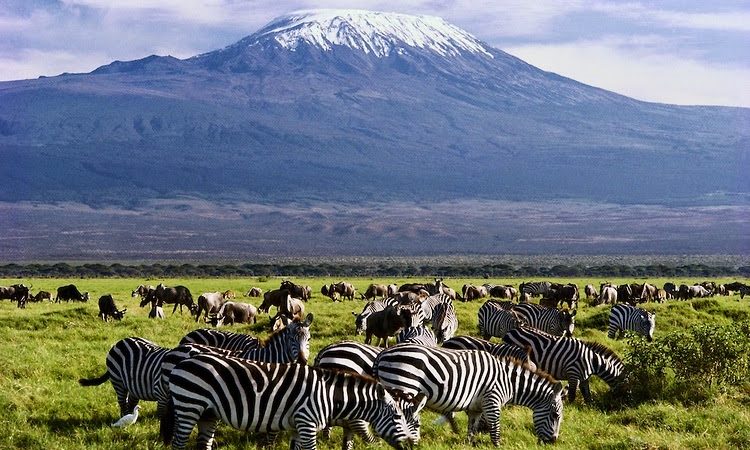
Amboseli National Park is located in Loitokitok District in Kajiado County southern Kenya near the border with Tanzania. The park covers an area of 392 square kilometers and offers the stunning views of Mount Kilimanjaro. Amboseli National Park at times is referred to as the “Land of Giants” because of its large herds of elephants. The park hosts other animals apart from elephants and some of these include; lions, cheetahs, buffalos, giraffes, and zebras.
Amboseli is also a home to 400 bird species and among these include; flamingos, pelicans, and African fish eagles.
Amboseli has several major tourist attractions, for instance, Observation Hill which offers views of wildlife.
The snow-capped peak of Mount Kilimanjaro and swamps, such as Enkongo Narok and Ol Okenya which attract many animals and birds. Amboseli National Park also offers cultural tours in the nearby Maasai villages where visitors get the opportunity to learn about the traditions and lifestyle of the Maasai people.
Masai Mara national park
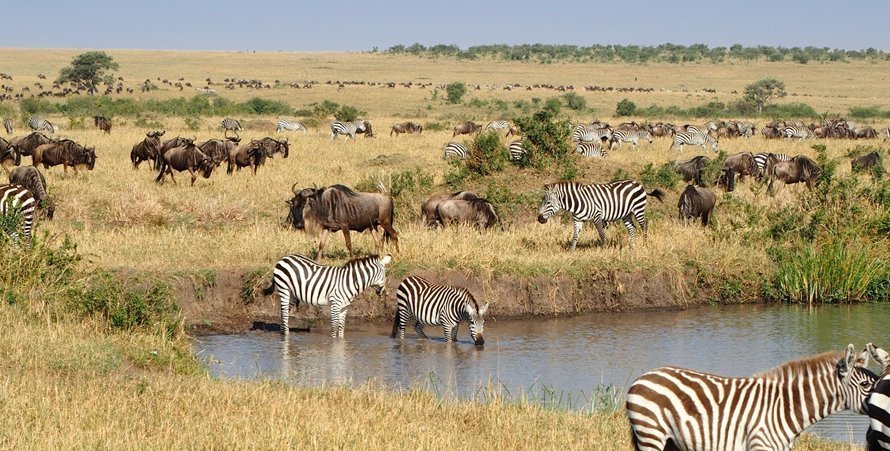
The protected area is located in southwestern Kenya bordering the Serengeti National Park in Tanzania to the south. Masai Mara National Park covers an area of 1510 sq kilometers and is part of the larger Serengeti- Mara ecosystem that stretches to Tanzania. The park is named after the Maasai people, who are the traditional inhabitants of the area and the Mara River which flows through it.
Masai Mara is known for its great migration which takes place between July and October. During this time, millions of wildebeests, zebras, and gazelles migrate from Serengeti National Park in Tanzania to Masai Mara in search for fresh grass. Apart from the great migration, the park is also known for its big cats making a prime spot for lions, cheetahs and leopards.
There are also other animals like giraffes, hyenas, hippos, crocodiles, elephants, buffaloes, rhinos and antelopes. The park also hosts over 500 bird species and some of these include; vultures, ostriches, and eagles.
Within the park, there is Mara Triangle which is located in the northwestern section of the park. The Mara triangle is bordered by the Mara river and the Oloololo escarpment.
This section is known for its high concentration of wildlife and where most of the game viewing is done. The Mara Triangle is also one of the best places to witness the dramatic river crossings during the Great Migration. Additionally, cultural tours to Maasai villages are also offered and visitors get the opportunity to experience the Maasai people’s rich traditions and lifestyle.