


The game viewing experience includes a wide range of activities such as game drives, hot air ballooning, horseback riding, boat safaris and guided walks to see wildlife roaming freely in the their habitat.
Game drives involve using open roof 4×4 safari vehicles or closed vehicles to search for wild animals with the help of rangers and safari guides. The capacity of a game drive vehicle ranges from 2-7 seater allowing for shared and private wildlife drives.

Walking safari offers an opportunity to walk on foot with a ranger and guide to spot wild animals and get closer to nature. Walking safaris originated in Zambia’s South Luangwa and gained momentum in other places including Uganda’s Lake Mburo and Tanzania’s Tarangire national parks and Laikipia plains in Kenya. Multiday guided walks can be found in Samburu national reserve in northern Kenya where other activities such as camel trekking are included as visitors walk from one camp to another.
Boat safaris are conducted on rivers and lakes in the afternoon to see wildlife that comes to drink water such as elephants, buffaloes, as well as hippos and water bird species, reptiles such as Nile crocodiles, and monitor lizards.
Uganda offers one of the best boat safaris which include the River Nile boat safari in Murchison falls and Kazinga channel boat cruise in Queen Elizabeth national parks. Among other places for boat safaris include Lake Ihema in Akagera national park Rwanda.

Some boat cruise activities are specially made for birding to look for shoebill stork in Mabamba wetland, Entebbe and Nile-Albert delta swamp in Uganda. Tanzania’s western circuit which includes Mahale, Gombe stream and Katavi national parks also offer boat cruises on Lake Tanganyika, Africa’s deepest lake.
Canoeing trips are also available on Lake Bunyonyi, Africa’s second deepest lake that is usually visited to relax after gorilla safaris in Uganda and in Rwanda boat cruises can be done on Lake Kivu and the twin lakes of Burera and Ruhondo. Canoe experience that is dedicated to game viewing is the Mokoro trips in Okavango delta Botswana.
Hot air ballooning
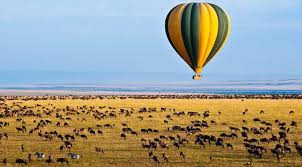
Balloon safaris are some of the best activity to enhance your game viewing experience. Flying for over an hour above the savanna plains offers spectacular view of the landscape and wildlife below.
Horseback safaris are a great alternative way to enjoy game viewing as move peacefully through the bush chances are relatively high to get closer to mammal species such as elephants, zebras, giraffes, and antelope species. Riding horses is also environmental friendly and offers access to areas that a vehicle may not reach.
Where to go for game viewing in East Africa
East African countries of Kenya, Tanzania, Uganda, and Rwanda offer some of the best game viewing in addition to gorilla safaris, chimpanzee trekking, beach holidays, and mountain climbing. The East Africa tourist visa allows seamless travel between Kenya, Uganda, and Rwanda with a single visa. Visiting Tanzania requires a separate visa.
Serengeti national park
The protected located in northern Tanzania covers 14,750 sq. km which is a spectacular landscape of open savanna plains characterized by acacia trees, riverine forests and rocky outcrops. The park is famous for harboring the Great wildebeest migration and the Big Five mammals which include elephants, rhinos, buffaloes, lions, and leopards.
There are four different sections of the park to consider for your visit which include central Serengeti known as Seronera valley, western corridor and Grumeti, southern plains, and northern Serengeti. Each area offering different activities for game viewing as explained below.
The western corridor includes Grumeti and Mbalagati rivers which host wildebeest crossings in July. There are private concessions within the corridor that offer walking safaris, night game drives and horseback safaris. Wildebeest rutting season takes place in the western corridor in May and June.
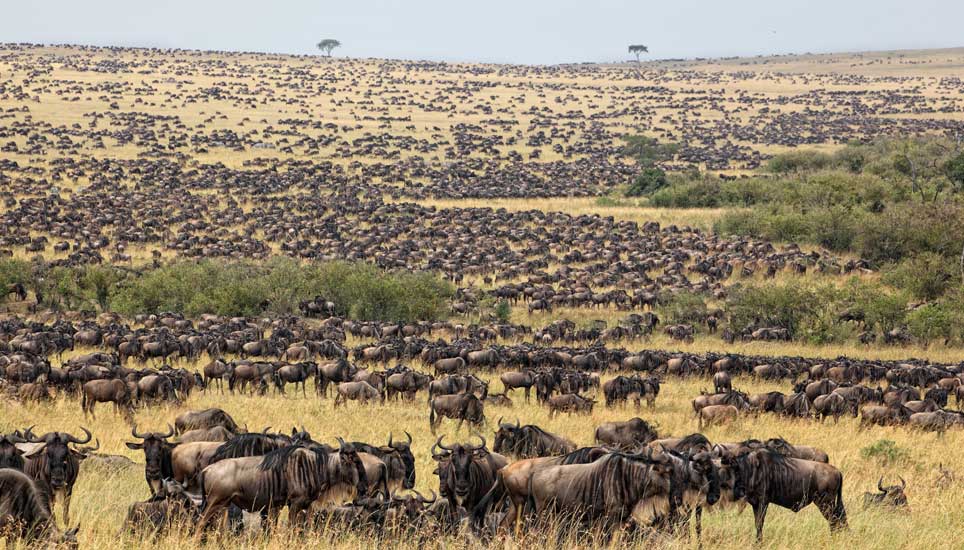
The southern Serengeti plains are the calving grounds for wildebeests from December to March with an estimated 6,000 calves are born every day. Stretching close to the shores of Lake Victoria, Southern Serengeti adjoins with Ndutu Plains in the Ngorongoro Conservation Area and contains short grass savanna which offers unhindered game viewing experience. There are excellent predator-prey interactions as lions, cheetahs, leopards, spotted hyenas, and wild dogs can be spotted hunting newborn animals.
The northern corridor borders with Maasai Mara national park in Kenya it is where the Great wildebeest migration crossing of the crocodile- infested Mara River takes place between July to October. The area offers a wide range of activities including hot air balloon safaris and bush means and sundowners overlooking the Mara River. Northern Serengeti offers a relatively high chance to see rhinos.
The central Serengeti hosts the park headquarters and offers high end luxury lodges and camps with strategic location along permanent water sources including the Retima pool that attract wildlife all year round. One of the outstanding physical features of the area are the Simba and Moru kopjes, which are granite rocks that rise above the plains. The kopjes are a good spot to see lions as they provide safe haven and vantage point for hunting given the high concentration of herbivores such as zebras and wildebeests.
Game drives in Ngorongoro Crater
Game viewing inside the Ngorongoro Crater, a UNESCO world heritage site and one of the 7 natural wonders of Africa offers an opportunity to spot the Big Five animals which include black rhinos, elephants, buffaloes, lions, and leopards. The Loduare Gate, the only entry point into the crater opens at 6 am in the morning and closes at 4pm in the evening.
There are several picnic sites within the crater including Ngoitokitok Hot Springs for visitors to take breaks and enjoy snacks. Among other picnic sites include those at the rim of the crater from where views of Ngorongoro crater floor are most spectacular for a keen photographer. There are some accommodations built on the crater rim including &Beyond Ngorongoro Crater Lodge, Ngorongoro Serena Lodge, Ngorongoro Sopa Lodge, and Entamanu Safari Camp allowing guests to enjoy the tranquility of the crater.
Maasai Mara national reserve, Kenya
Maasai Mara covers 1,510 sq. km in the northern part of the Greater Serengeti ecosystem in Narok County of western Kenya at an altitude of 1,500 – 2,200 meters (4,900 – 7,200 feet) above sea level.
The western part of the reserve known as Mara Triangle borders the Oloololo escarpment of the Great Rift Valley system and offers panoramic views over the Mara plains dotted by rocky outcrops, yellow fever, umbrella thorn and whistling thorn acacia tree species.
The Mara and Talek rivers flow through the reserve into Lake Victoria creating riverine forests, seasonal swamps and waterholes that support rich biodiversity including the Great wildebeest migration, Big Five mammals which include lions, leopards, elephants, buffaloes, and rhinos.

Maasai Mara has one of the highest populations of big cats including over 850 lions as well as leopards, cheetahs, and African wild dogs. Among other wildlife species in Maasai Mara include zebras, Maasai giraffes, gazelles, impalas, crocodiles and hippos, and over 500 species of birds.
There are different tourism areas to consider for your safari to Maasai Mara national reserve which include the main public reserve, the Mara Triangle and 15 conservancies neighboring the main reserve which are owned by over 14,500 local Maasai communities.
The main reserve and Mara Triangle are the best areas to witness the wildebeest migration crossing of Mara and Talek rivers, which are vantage points to see herds of elephants, buffaloes, hippos and crocodiles.
However, the main reserve is open to the public, doesn’t offer night game drives, guided walks, and off-road driving. To enjoy such activities visit the Mara Triangle or a conservancy which offer walking safaris, night game drives and Maasai cultural village visits.
Amboseli national park, Kenya
The key highlights of game viewing experience in Amboseli national park are the super tusker elephants with massive ivory tusks that almost touch the ground and spectacular views of Mount Kilimanjaro. Four of the Big Five buffaloes, elephants, leopards, and lions are found in the park.
Lake Amboseli among other lakes and swamps such as Enkongo Narok Swamp form the centerpiece of the park and attracts buffaloes, hippos during the dry season between June to October. There are over 500 species of birds including Greater and lesser flamingos and the best time to visit Amboseli for birding safari is November to May.
Night game drives to spot nocturnal species such as Aardvarks, servals, honey badgers are available in some of the wildlife conservancies adjacent to the park including Selenkay conservancy owned by the Maasai people.
A safari experience in a conservancy includes Maasai cultural tours and guided walks to search for the “Little Five” which include Elephant shrew, Ant lion, Leopard tortoise, Buffalo weaver, and Rhino beetle.
Queen Elizabeth national park, Uganda

Located in the rift valley at the foothills of Rwenzori Mountain Range, Queen Elizabeth national park contains a variety of habitats and spectacular physical features including open plains, tropical forests, Kazinga channel which connects Lake Edward and Lake George, making for a must-visit gem in East Africa.
There are over 600 species of birds including shoebill stork; chimpanzees, and 95 mammal species including tree climbing lions, leopards, spotted hyenas, buffaloes, elephants, Uganda kobs, warthogs, waterbucks, and bush bucks. The channel harbors large pods of hippos, Nile crocodiles and attracts water bird species.
The park offers a wide range of game viewing experiences to add to your Uganda gorilla safari, from traditional day and night game drives and Kazinga channel boat safaris to experiential lion tracking, guided walks along Ntungwe River in Ishasha sector. Visitors can enjoy chimpanzee trekking in Kyambura gorge and Kalinzu forest reserve.
Murchison Falls National Park, Uganda
Murchison falls national park is bisected by River Nile which squeezes through a 7-meter gorge and plunges over a 40-meter cliff with a thunderous roar to create one of the world’s powerful waterfalls.
Habitats along the Nile including riverine forests, papyrus swamps and Nile delta, Borassus palm dotted savanna plains support rich biodiversity including 77 mammal species, over 441 species of birds and primate species including patas monkeys and chimpanzees in Budongo forest central forest.
Murchison Falls is a fantastic destination for seeing the Big Five mammals which include lion, elephant, buffalo, leopard, and rhinos. However, rhinos can be seen on foot with a ranger at Ziwa rhino sanctuary which is located along the way to the park.
Activities to do on a safari to Murchison falls include day and night game drives, Nile River boat safari, boat cruise to the delta, top of the falls hike and chimpanzee trekking. On the way to or from Murchison falls visitors can add a visit to Ziwa Rhino Sanctuary, home to over 35 rhinos.
Akagera national park, Rwanda

Spanning for 1,120 sq. km Akagera national park gets its name from Akagera River which flows along the eastern boundary of the park creating a mosaic of lakes and swamps in the east central part that form one Africa’s largest protected wetlands.
The west north part contains undulating hills, open savanna plains and woodland which create a vital ecosystem for over 500 species of birds and 8,000 large mammal species. Akagera is one of Africa’s conservation success stories for biodiversity restoration.
After the Rwandan genocide against Tutsi in 1994, the protected area was severely degraded by refugees who settled in and around the park, clearing over two-thirds for farming, charcoal burning, and cattle grazing.
The park’s original area was reduced from 2,500 sq. km to the current size and illegal poaching led to extinction of vital wildlife species including lions and rhinos. Restoring the park started in 2010 through the Rwandan Development Board’s long-term renewable agreement with African Parks Network focusing on law enforcement, reintroducing lost species, local community involvement in management of the park and boosting wildlife tourism.
Seven lions from South Africa were introduced in 2015 and the population has multiplied to 60 individuals. This was followed by 18 eastern black and 30 southern white rhinos in 2017 and 2021 respectively. Strengthening anti-poaching efforts including K-9 anti-poaching unit of rangers and sniffer dogs, 120 km solar powered fence and advanced surveillance technology all have helped Akagera to return to its former glory.
The Big Five mammals which include elephants, rhinos, buffaloes, lions and leopards are thriving and the overall wildlife numbers have increased to 8,000 large mammals including over 885 hippos, 999 zebras, 2 093 buffaloes, 1 057 impalas, and 948 waterbucks.
In addition to over 500 species of birds, Akagera offers one of the best game viewing experiences based on game drives and boat safaris on Lake Ihema which compliments well with Rwanda gorilla safaris in Volcanoes national park.
Game viewing safari experiences include interactions local communities, such as the Maasai and Batwa pygmies in Uganda who share their traditions and knowledge about coexisting with wildlife.